Across our 4,000 hectares, 70% are certified High Environmental Value and 550 hectares are farmed organically or are in conversion. 40 hectares are planted with disease-resistant grape varieties. 400 winegrowers are carrying out this transition, plot by plot.
Advancing our growing practices
Since 2014, Tutiac has invested in an experimental vineyard dedicated to researching grape varieties and innovative winegrowing practices. Our objective is to protect natural resources and ecosystems, develop biodiversity, and limit input products. This initiative is funded by the French Ministry of Agriculture via the Casdar programme in favour of innovating in the context of the agroecological transition.
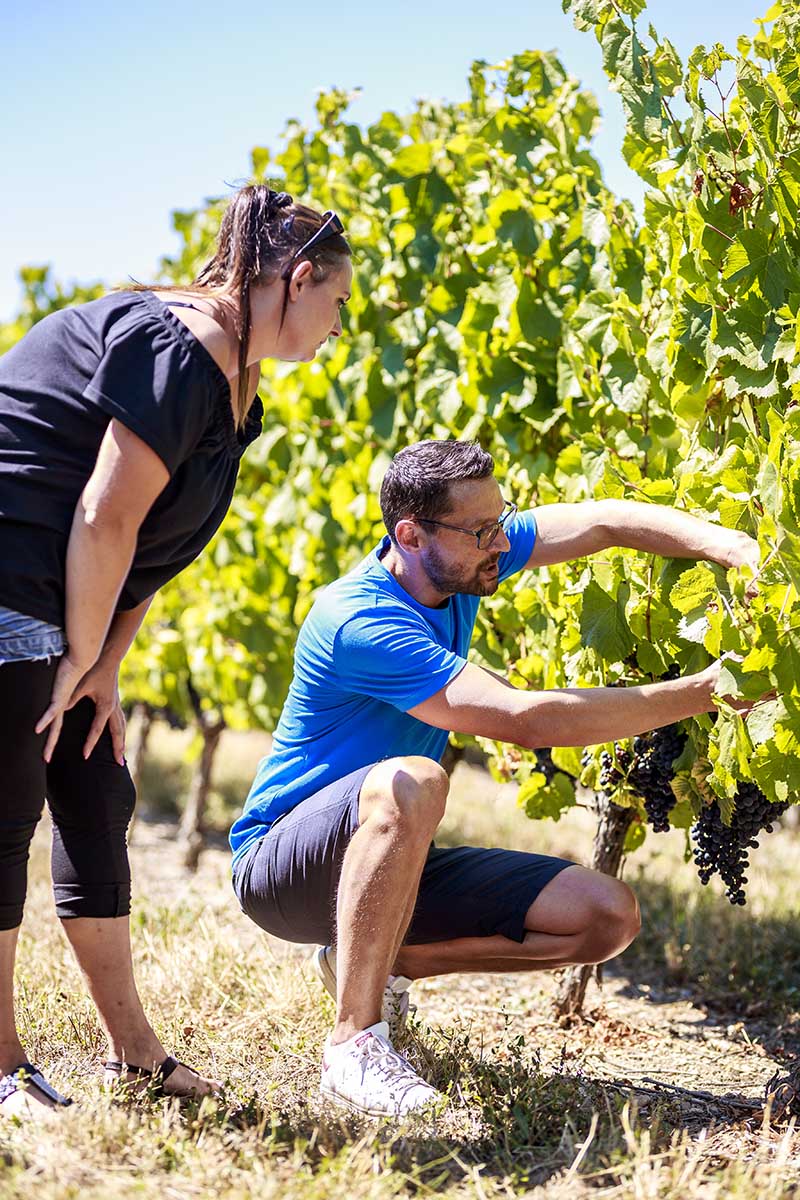
In these vineyards, in collaboration with the INRA and the Chamber of Agriculture, we study grape varieties which are naturally resistant to vine diseases, in order to limit or prevent the use of pesticides.
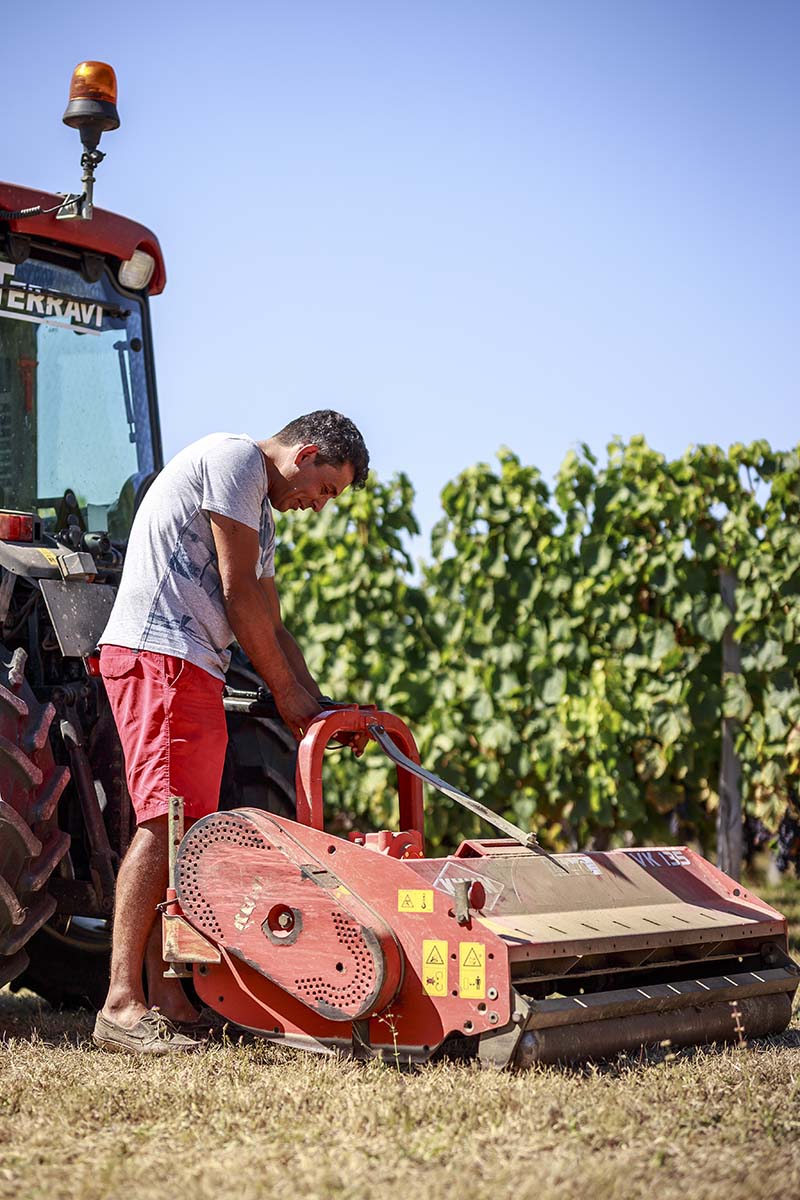
As soon as an environmentally and economically sound practice has proved successful, it is implemented in our member winegrowers’ vineyards. Effective practices include sowing in between vine rows, planting hedgerows at the edges of plots, planting flowers on fallow land, using mating disruption to reduce the risk of pests, and converting to organic agriculture.
Developing biocontrol
Tutiac is also involved in researching biocontrol methods to expand biocontrol solutions in crop protection. We work, for example, with ImmunRise, a Bordeaux start-up whose marine-derived alternative could transform plant protection products. ImmunRise is working in particular on marine micro-organisms able to stimulate the natural defences of plants, or to act directly on the pathogens behind vine diseases such as downy mildew and botrytis. Promising results have already been obtained in the laboratory.
Good daily practices
These efforts in the vineyard would make no sense if they did not extend to the whole business. Among other concrete measures, our cooperative ensures the recycling and ensuring the recovery and recycling of waste, producing photovoltaic electricity thanks to shade structures installed at a production site, and is installing electric vehicle charging points open to the public.
Ambitious yet realistic objectives
Today, 70% of our vineyard is certified High Environmental Value and 550 hectares are farmed using organic farming or are in conversion. Our ambition is to certify all 4,000 of our hectares.
Reducing plant protection inputs, or using alternatives to them, is the common thread of our strategy. It guides our technical choices in the vineyard and is reflected in particular in the development of grape varieties naturally resistant to fungal diseases. Nearly 40 hectares are now planted with these innovative varieties, which make it possible to cut the use of plant protection products by a factor of 5 to 10, or even to dispense with treatments entirely on certain plots, while maintaining a high level of grape quality.
This approach is part of an overall vision of viticulture: the use of biocontrol, precision decision-support tools, soil tillage and targeted mechanical operations, often used in place of conventional chemical methods.
Details of these practices and of the certifications obtained are published in our certification documents and our CSR report, available below.
Discover all the certifications of the TUTIAC group and our CSR commitment.